
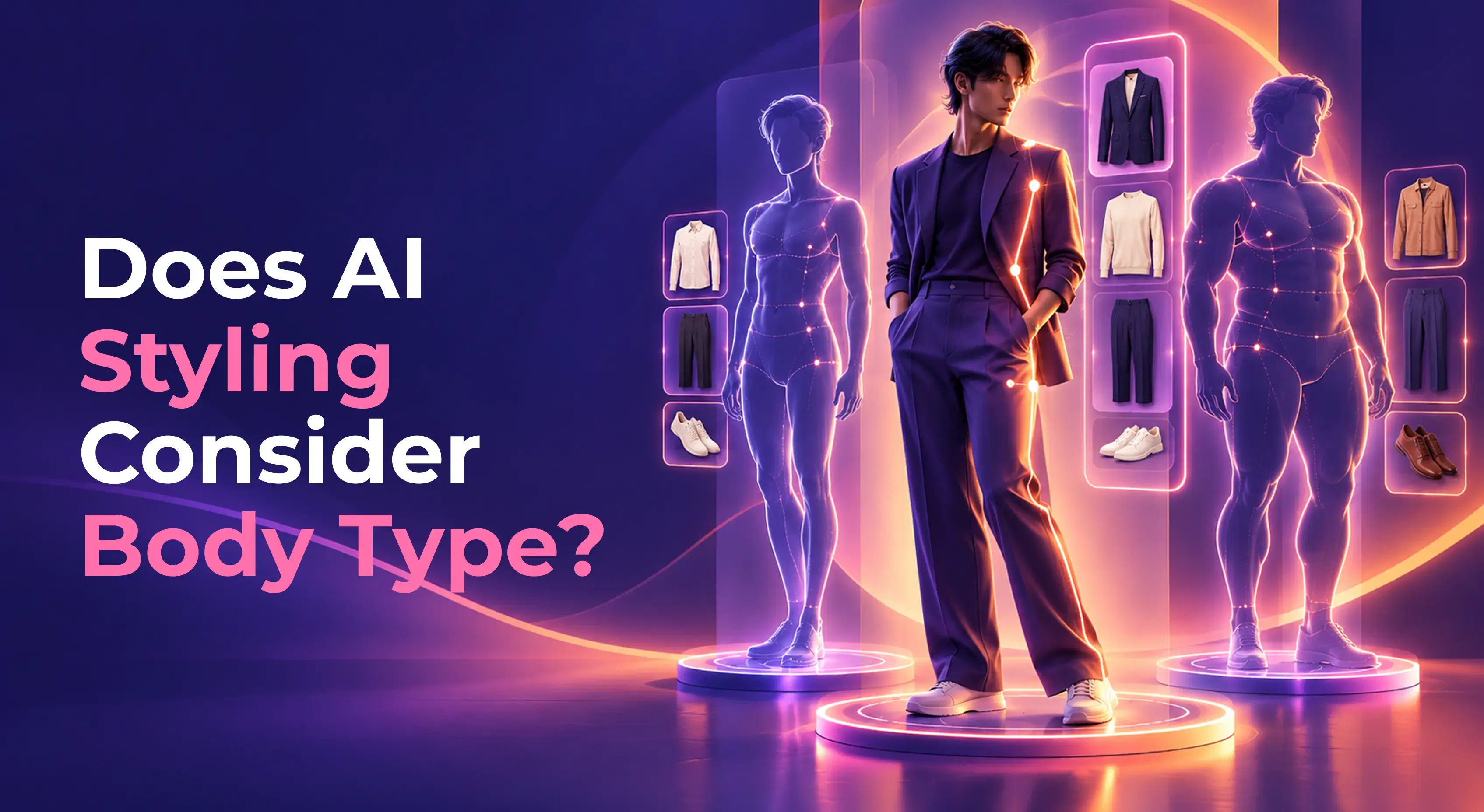
Does AI Styling Consider Body Type?
Does AI styling really understand body type? See how AI reads shape and proportion, where it falls short, and how brands show clothes on every body.
The Short Answer
Yes, most AI styling tools do consider body type, but not all of them do it well. Good tools look at your proportions, measurements, and past choices. Weaker tools just sort you into one of five shapes and give you the same old rules. The best results come when AI is used as a helper, not as the final judge of what looks good on you.
Let's break it down in simple terms.
Why This Question Matters So Much
Anyone who has shopped online knows the feeling. The dress looked perfect on the model. Then it arrived, and it looked nothing like that on you.
This is not just a small problem. McKinsey found that about 70% of apparel returns come down to poor fit or style, and Coresight Research puts the US online apparel return rate at 24.4%.
So when people ask "does AI styling consider body type," what they really mean is:
- Will this tool understand my body?
- Will it suggest clothes that actually fit and flatter me?
- Can I trust what I see on screen?
What "Body Type" Really Means in Fashion
Most styling advice uses five common shapes:
- Hourglass: shoulders and hips about the same width, with a defined waist
- Pear (Triangle): hips wider than shoulders
- Apple (Round): more fullness around the middle
- Rectangle: shoulders, waist, and hips fairly even
- Inverted Triangle: shoulders wider than hips
These labels are a good starting point. But here is the truth: your body is more than one word. Two people with the "pear" label can have very different legs, torsos, and shoulders. Height, posture, and where you carry weight all change how clothes sit on you.
How AI Styling Actually Reads Your Body
AI stylists don't "see" you the way a friend does. They gather clues and look for patterns. Here are the main ways they do it.
1. Measurements and Quizzes
You answer questions like your height, usual size, and where clothes feel tight or loose. The tool uses details like shoulder width compared to hips and which cuts worked for you before to map your proportions, rather than just giving you a label.
2. Photo Analysis
Some apps ask for a full body photo. The AI studies your outline and compares the widths of your shoulders, waist, and hips to suggest a shape.
3. Your Behavior
Many apps also learn from what you click, save, and skip. Over time, the suggestions change based on your taste.
4. Garment Details
Smart tools also study the clothes themselves: the neckline, the hem length, the fabric weight, and where the structure sits. Then they match those details to your shape.
Body Type and AI Suggestions: A Quick Guide
Here is what most AI stylists tend to suggest for each shape, and what you should keep an eye on.
- Hourglass — Usually suggested: wrap dresses, belted styles, fitted tops. Watch out: it may push "fitted" even when you want comfort.
- Pear — Usually suggested: A-line skirts, wide-leg trousers, bold tops. Watch out: it can hide your hips when you may want to show them.
- Apple — Usually suggested: V-neck tops, empire waists, flowy layers. Watch out: it often suggests boxy shapes that feel shapeless.
- Rectangle — Usually suggested: peplum tops, layers, belts to add curves. Watch out: it may overdo "adding curves" when you like straight lines.
- Inverted Triangle — Usually suggested: simple tops, fuller skirts, wide-leg pants. Watch out: it can ignore your personal style for "balance" rules.
Tip: Treat this as a starting point, not a rulebook. Your comfort and your style always come first.
Where Does AI Styling Get It Right?
When a tool is built well, it can be really helpful.
- It saves time. You skip hours of scrolling through clothes that were never going to work.
- It spots patterns you miss. You might notice that every jacket you return is tight in the shoulders.
- It learns your taste. The more you use it, the better the suggestions get.
- It gives confidence. Seeing clothes in a shape like yours makes buying less of a gamble.
Where AI Styling Still Falls Short?
Being honest about the limits is important. Here are the biggest ones.
Labels Can Box You In
Rigid shape rules can lead to bad advice. One review gives a clear example: an AI may read "apple" as "hide the middle" and suggest boxy tunics that actually hide a person's natural hip shape and make them look shorter.
Training Data Can Be Biased
If an AI mostly learned from photos of slim models, it may understand those bodies best. AI bias mirrors human bias, since beauty filters and fashion images online shape what these systems learn.
Photos Can Be "Too Perfect"
In virtual try-on, AI can smooth the body too much, reducing natural curves or blurring fabric folds, and tight dresses, fitted blazers, and swimsuits are harder to get right.
Real Life Is Not a Still Photo
Most tools don't think about how you move, sit, or bend during your day. A skirt can look great standing still and feel awful when you sit down.
Why Body Type Matters for Fashion Brands Too
This is the part most articles skip. Body type is not just a shopper problem. It is a big business problem.
Shoppers Want to See Bodies Like Theirs
A study from the University of Bath, the University of Groningen, and Vrije Universiteit Amsterdam found that showing clothes on models of different sizes improved sales and costs, raised customer satisfaction, and could cut wasteful returns. The same research challenged the long-held idea that thin models drive sales.
Usability experts at Nielsen Norman Group saw the same thing. When shoppers could choose a model of a different size to view products on, they reacted positively and used that option.
The Old Problem: Cost
So why don't all brands do this? Because booking many models for every product is expensive. The Bath researchers themselves noted that showing every item in several sizes could be costly, especially for high-volume fast fashion brands.
How AI Is Changing That
This is where AI fashion production helps. Instead of booking five photoshoots, brands can now create realistic AI models with different body shapes and show the same garment on each one.
For example, on Fashion Studios, brands can build a model with control over skin tone, gender, body, and hairstyle, then place their own garments on that model. Because the platform keeps the same model identity across shoots, a brand can create a small "body range" of models and reuse them for every new collection.
A Simple Workflow for Brands
- Pick three to five body shapes that match your real customers.
- Create a model for each one and keep them as your regular lineup.
- Upload your product and generate the same item on each model.
- Check every image against the real garment for color, drape, and fit.
- Let shoppers choose the model that looks most like them on your product page.
Important: AI images should always match the real product. A retail survey by Stylitics found that while 71% of shoppers saw little or no difference between AI and real images, people quickly noticed wrong details like fabric, buttons, or proportions, and 59% wanted AI images to be labeled. Being honest builds trust.
How Shoppers Can Get Better Results From AI Stylists
Want the AI to understand you better? Try these easy steps.
- Give real measurements, not the size you wish you were.
- Use a clear, full body photo in good light with arms slightly away from your body.
- Tell it what you like and dislike. If you hate belts, say so.
- Add your lifestyle. Office, school, gym, or parenting all need different clothes.
- Question the advice. If a suggestion feels wrong, trust yourself.
- Check reviews from real buyers with a similar build before you order.
Final Thoughts
So, does AI styling consider body type? Yes, and it is getting better every year. But it works best when it treats your body as unique, not as a label to fix.
For shoppers, AI is a smart assistant that saves time and guesswork. For brands, it opens the door to something shoppers have wanted for years: seeing clothes on bodies that look like theirs, without the huge cost of endless photoshoots.
If you run a fashion brand and want to see how your products look across different body types, you can try Fashion Studios for free and build your first model in minutes.
Frequently Asked Questions
Can AI accurately find my body type?
It can give a good estimate from measurements or a clear photo. But accuracy depends on the photo quality, the data you give, and how well the tool was trained. Use the result as a guide, not a final answer.
Is AI styling better than a human stylist?
Not better, just different. AI is fast and available anytime. A human stylist understands feelings, culture, and personal taste in a deeper way. Many people get the best results using both.
Does AI styling work for plus size bodies?
It depends on the tool. Some are trained on a wide range of bodies and work well. Others were trained mostly on slimmer models and may give weaker advice. Look for apps that show plus size examples.
Is it safe to upload my photo to an AI styling app?
Always read the privacy policy first. Check whether the app stores your photo, sells data, or lets you delete it. Choose tools that are clear about how they handle your images.
Can brands show one outfit on different body types using AI?
Yes. AI fashion production tools let brands create models with different body shapes and place the same garment on each one. This helps shoppers picture the fit and can reduce returns.
Will AI styling reduce online returns?
It can help. Since poor fit is the top reason people send clothes back, better fit advice and more realistic product images give shoppers a clearer idea of what they are buying.
Autres articles
Voir tout
How to Create AI Fashion Models
Learn how to create AI fashion models step by step, from product photos and model setup to prompts, quality checks, legal disclosure, and choosing the right AI fashion tool.
Comment l'IA transforme la production et les shootings de mode
L'industrie de la mode évolue plus vite que jamais. Les workflows traditionnels, autrefois centrés sur les photographes, studios, mannequins, maquilleurs, stylistes et une logistique complexe, sont aujourd'hui transformés par l'intelligence artificielle.
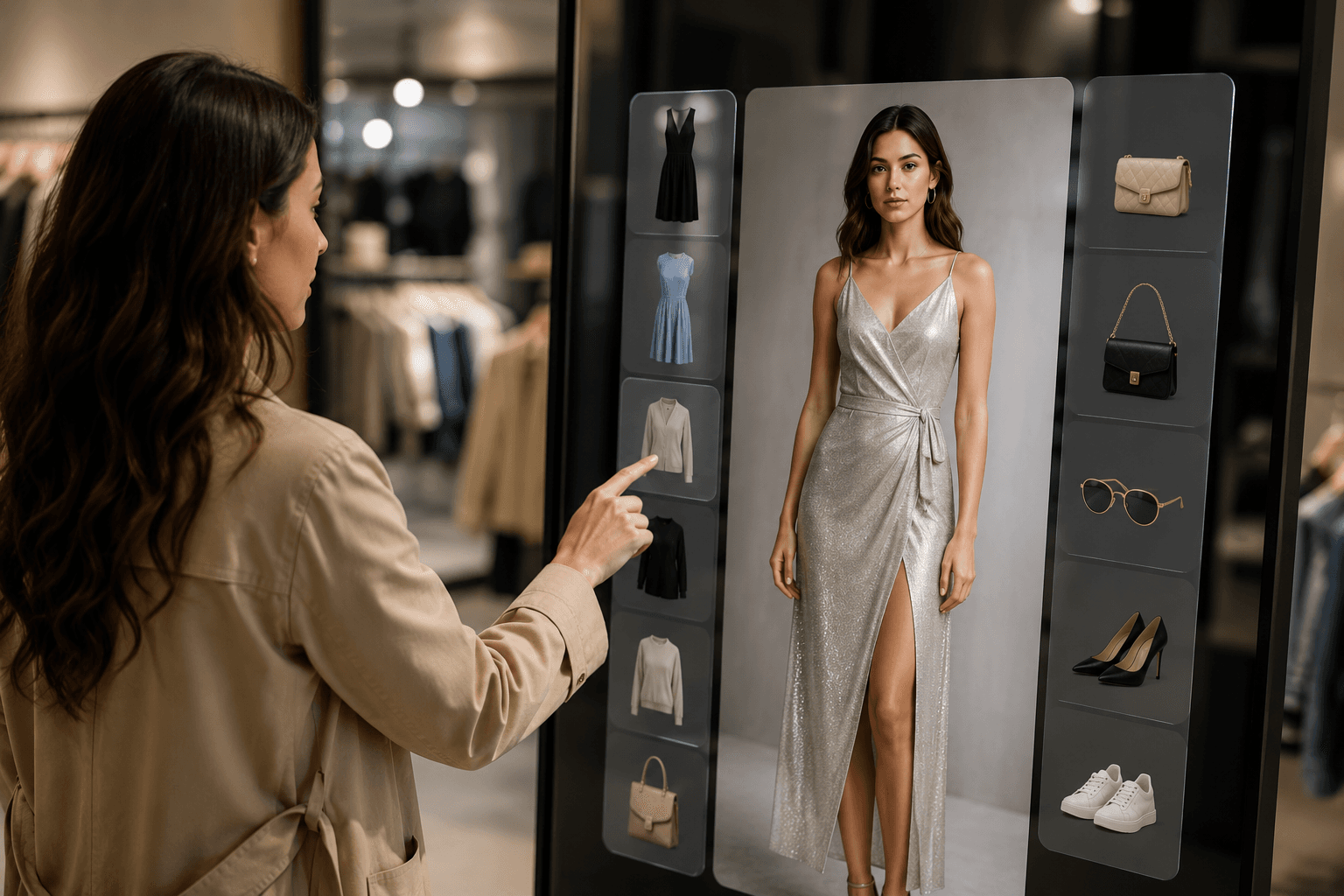
L'avenir de l'essayage virtuel : modèles IA, vêtements et accessoires
L'industrie de la mode se dirige rapidement vers des expériences numériques propulsées par l'intelligence artificielle. L'une des innovations majeures qui transforme le shopping et la production en ligne est la technologie d'essayage virtuel IA.